


To commemorate the 30th anniversary of the Beijing Declaration and Platform for Action, UN Women and the Supreme People’s Court (SPC) of the People’s Republic of China (PRC) jointly convened the International Symposium on Judicial Concept and Practice for Women's Rights Protection in Chengdu, Sichuan, on 21 November 2025.
This symposium marks an important collaboration between UN Women and the Supreme People’s Court of the PRC in the areas of women’s rights protection and combating domestic violence. Through international exchanges on judicial practices against domestic violence, the event aimed to foster mutual learning, strengthen national capacities, and promote collective accountability to further guarantee the rights and interests of women and girls.
The opening ceremony featured remarks by Justice Wang Zhongming, Justice and Vice President of the Supreme People’s Court of PRC; Ms. Christine Arab, Regional Director for Asia and the Pacific at UN Women; and Justice Wang Shujiang, Justice and President of the High People’s Court of Sichuan Province. Mr. Chen Zhiyuan, President of the China Applied Jurisprudence Institute of the Supreme People’s Court, chaired the opening session and delivered the closing remarks.
Vice President Wang Zhongming emphasized that the symposium is not only an important commemoration of the 30th anniversary of the Beijing Declaration and Platform for Action, but also a demonstration of the judiciary’s commitment to advance the spirit of the Global Leaders’ Meeting on Women, promoting gender equality, and safeguarding women’s rights and interests.
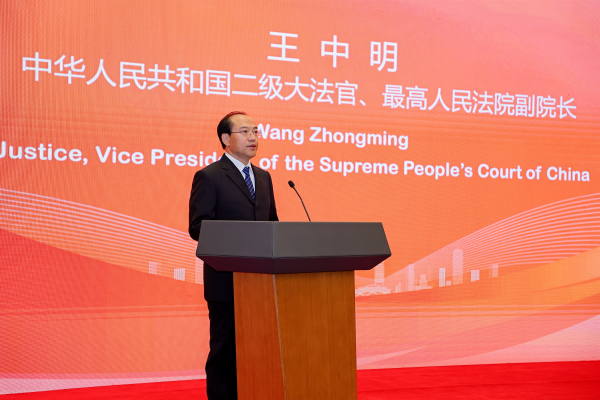
Wang Zhongming speaks at the sympodium. [Photo/court.gov.cn]
Ahead of the event, the Supreme People’s Court released the 2025 Guiding Case of Anti-Domestic Violence in China, selecting eight representative cases finalized over the past three years. These cases cover issues such as recognition of mental abuse, expert testimony providing interdisciplinary knowledge, one-stop anti-domestic violence coordination mechanisms, and the recognition for care work with compensation for household labor for domestic violence survivors. It underscores China’s courts’ continuous efforts toward the goal of “zero violence” and in alignment with international standards under the UN Convention on the Elimination of All Forms of Discrimination Against Women (CEDAW).
Ms. Christine Arab highlighted that, as we continue to commemorate Beijng+30, let us remember that justice systems are among the most powerful levers for change. They are where women’s rights are upheld and where the promises of equality become reality. As UN Women, we stand ready to further our partnership with the Supreme People’s Court and other partners here today to accelerate the implementation of the CEDAW, the Beijing Declaration and Platform for Action, and the 2030 Agenda for Sustainable Development.
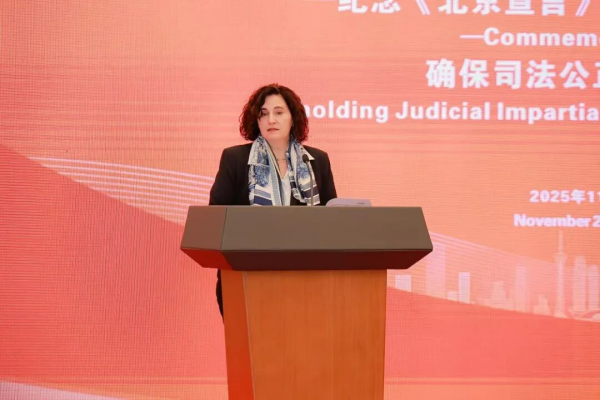
Ms. Christine Arab speaks at the sympodium. [Photo/court.gov.cn]
During the symposium, judges and experts from China and abroad delivered keynote speeches and engaged in discussions on three thematic areas:
Rules of Evidence in Confirming the Facts of Domestic Violence
Issuance and Enforcement of Personal Safety Protection Orders
Professional Support and Care for Judicial Personnel in Anti-domestic Violence Work
Participants shared practical approaches, summarizing judicial achievements and future collaboration opportunities. Discussions highlighted the need for expert testimony to support accurate evidence assessment, the use of digital tools to enhance efficiency in issuing and enforcing protection orders, and the importance of safeguarding the health and professional security of judicial personnel to ensure sustainable progress in combating domestic violence.
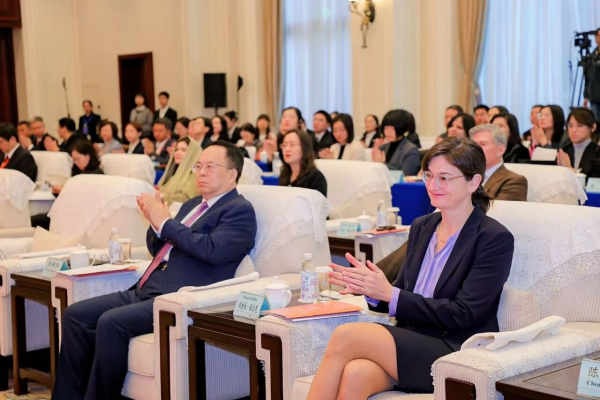
To commemorate the 30th anniversary of the Beijing Declaration and Platform for Action, UN Women and the Supreme People’s Court of the People’s Republic of China jointly convenes the International Symposium on Judicial Concept and Practice for Women's Rights Protection in Chengdu, Sichuan, on 21 November 2025. [Photo/court.gov.cn]
The symposium brought together over 80 participants, including representatives from the Supreme People’s Court, Supreme People’s Procuratorate, local courts from 12 provinces and regions, UN Women, and judges and scholars from countries such as the United States, Germany, and Pakistan.

